Psili Ammos Beach Thassos: 250m of Fine White Sand
Profile
Psili Ammos Beach, Thassos: 250 Metres of Fine Sand on the Island Where Sirens Charmed Sailors
Greece | Thassos | Northeast Aegean Islands
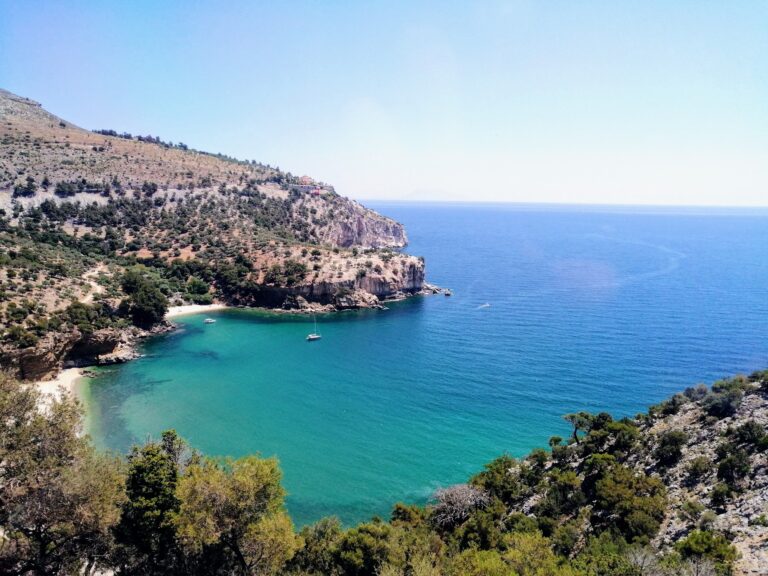
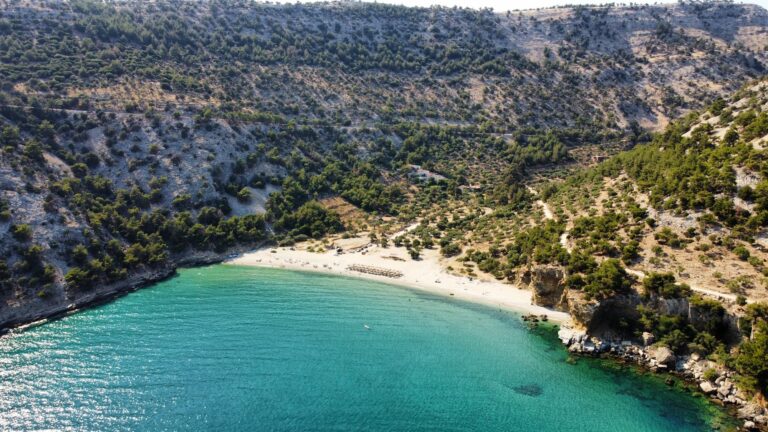
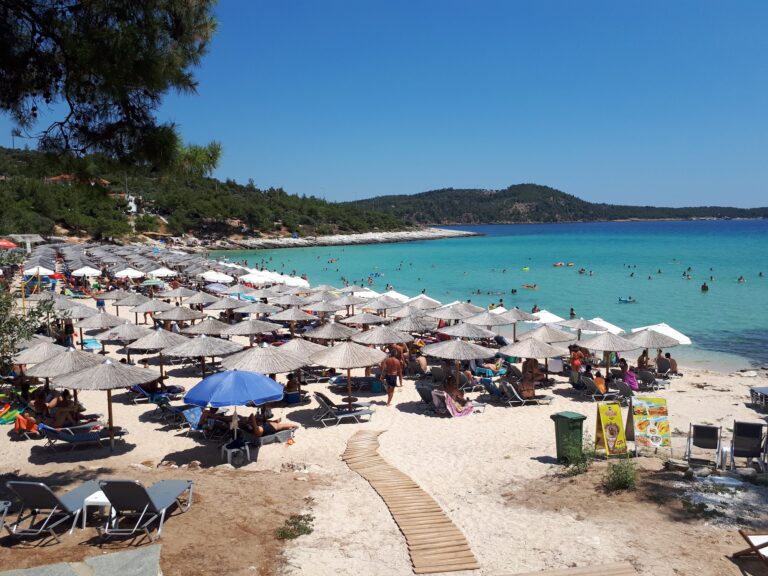
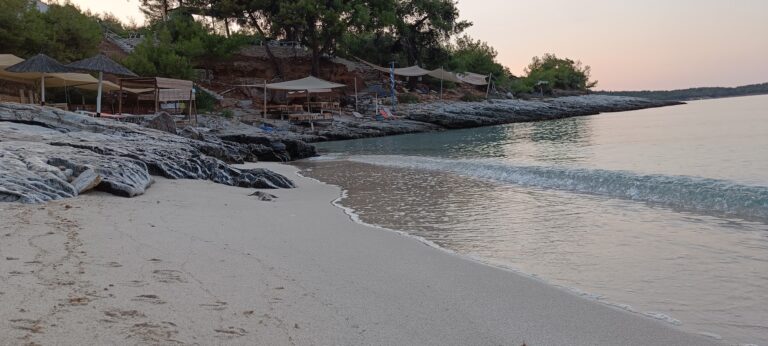
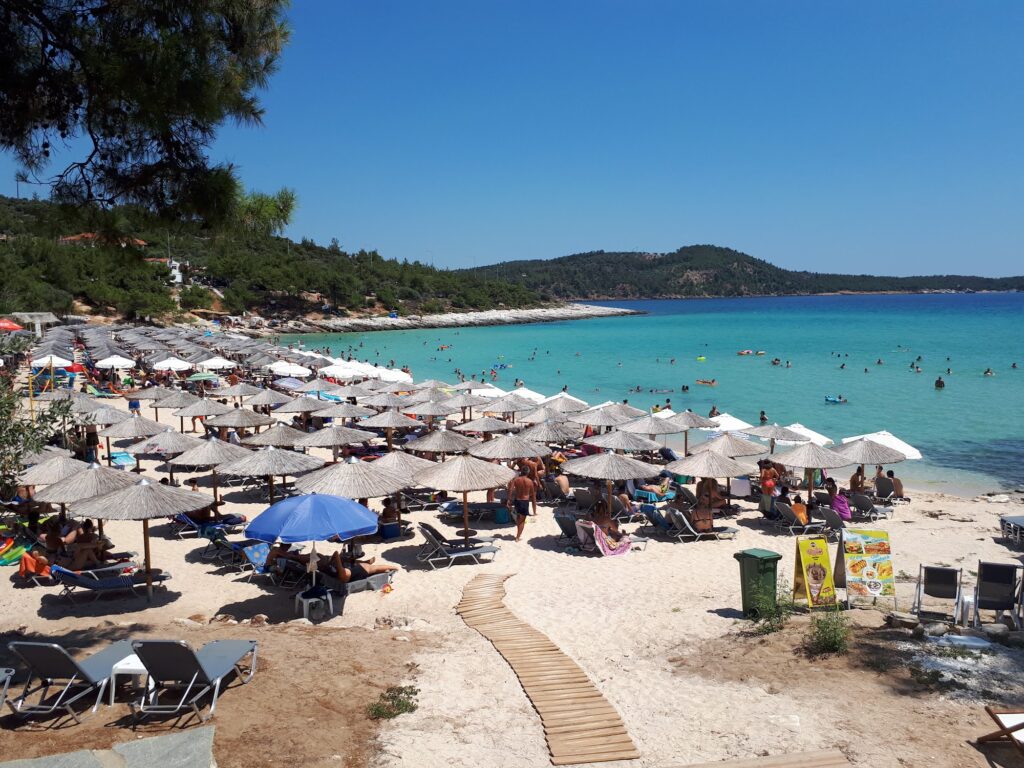
The name is the description. Psili Ammos (ψιλή άμμος) means “fine sand” in Greek — a name that gives the beach its most direct recommendation and its most accurate characterisation simultaneously. The sand is exceptionally fine and soft, white enough to match the colour of the crystal waters above it, and consistent through the full 250-metre length both on the shore and on the seabed. No rocks in the entry zone. No sharp pebbles on the surface. The sand-to-water transition is the smooth, gradual entry that gives the beach its family-with-young-children reputation.
The local lore attached to the area around Astris — the village nearest to Psili Ammos — holds that the coastal zone was once believed to be inhabited by sirens who charmed sailors with their songs. The siren mythology attached to promontories and dangerous coastal passages throughout the Aegean is the specific classical tradition that the location inherits. Whether Psili Ammos was a genuine siren location in the ancient imagination or a later attribution is less clear than the beach’s consistent ranking as one of the most beautiful in Thassos.
Psili Ammos Beach is in the southern part of Thassos, near Potos, on the southern coast of the island. Its name means fine sand. The beach is 250 metres long with very fine sand. There are no rocks around the shore so you can walk safely without water shoes, but sometimes there are strong waves. In some places the sea floor goes deep suddenly, so be careful in the water, especially with children.
The sudden depth drop is the honest practical note — the generally shallow entry and the fine sand seabed can mislead visitors into thinking the water stays shallow throughout. In specific sections the depth increases quickly, and the strong wave warning (which applies when conditions create surf on this typically calm south-facing bay) amplifies the supervision requirement.
Getting There: 5km from Potos, 45km from Limenas, Free Parking in the Olive Grove, KTEL Bus Stop
Thassos is an island, so the first requirement is the ferry: from Kavala (the nearest mainland port, approximately 35 minutes) or from Keramoti (15 minutes, the shorter crossing). Both routes are served by multiple ferries daily in summer. Kavala is connected to Thessaloniki by the A2 motorway — approximately 2 hours — and to Xanthi and the Eastern Macedonia road network.
From Limenas (Thassos Town), the drive to Psili Ammos follows the coastal road around the southern and western coast — approximately 45 kilometres and 45 to 50 minutes, with the coastline views making the approach scenic throughout. From Potos (the largest resort village on the southern coast), the beach is 5 kilometres — approximately a 7-minute drive.
Free parking is available in the olive grove above the beach. The parking is consistent with Thassos’s general approach to coastal access — most beaches on the island offer free roadside or grove parking, which distinguishes the island’s beach infrastructure from the paid parking systems of more commercially developed Greek island resorts. The grove fills in peak season; arriving before 10:30am is the practical window.
By KTEL Kavala bus, the service running the island’s coastal circuit stops on the main road above the beach. Psili Ammos is within the route that covers the southern coast between Limenas and Potos and onwards to the southeast.
The Beach: 250 Metres, Fine White Sand, Shallow Entry With Sudden Deep Sections, Volleyball Court
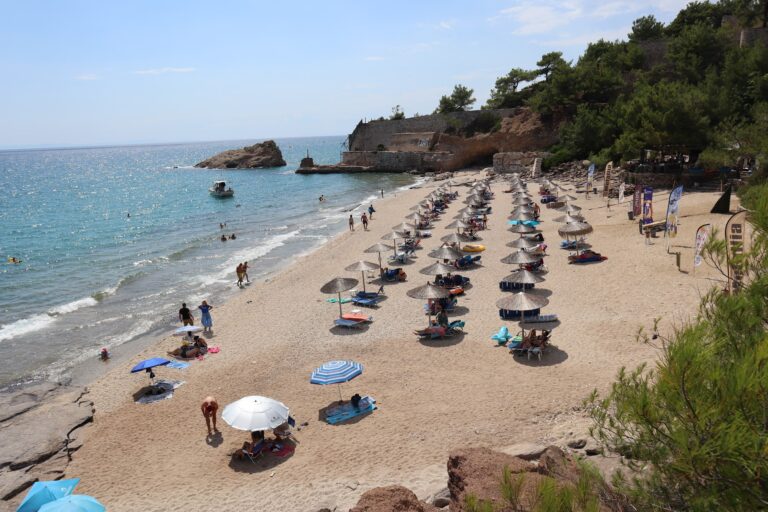
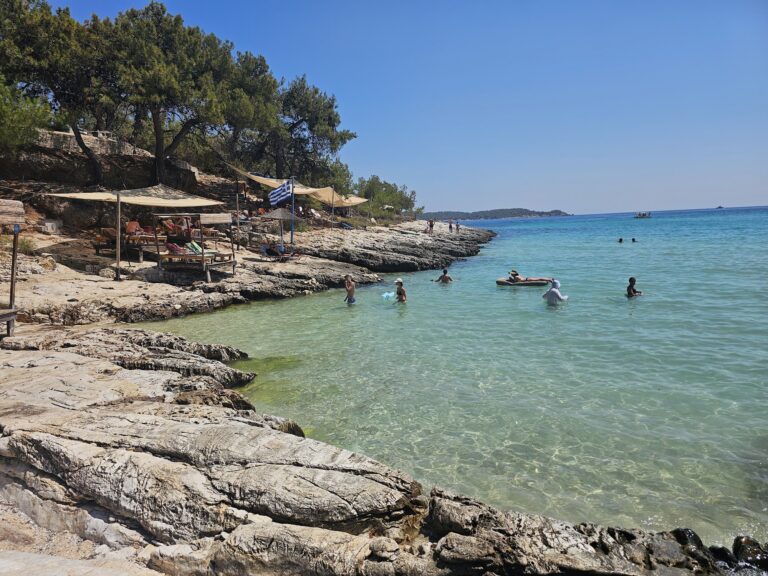
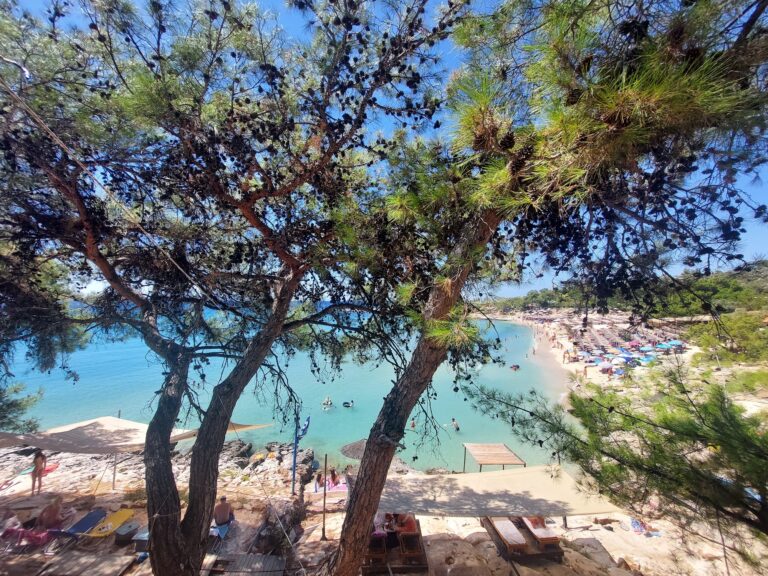
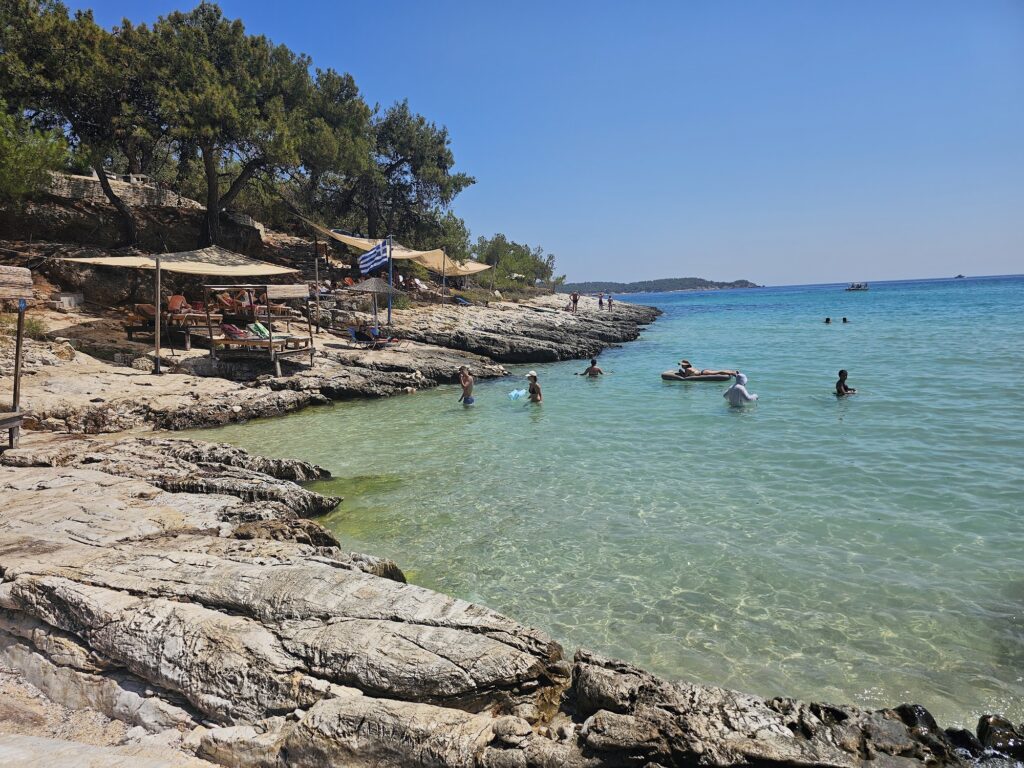
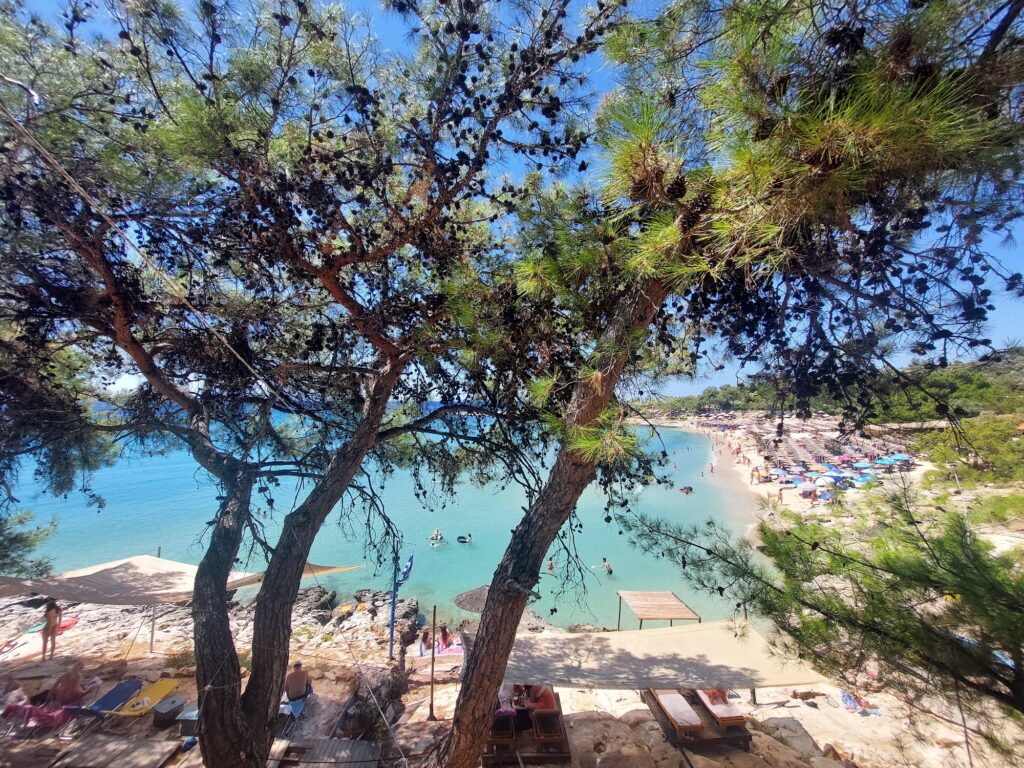
The beach is sandy throughout — no pebble section, no gravel entry, no rock fields at the margins. The sand is consistent in texture from the upper beach to the seabed. The absence of rocks also means the natural shade is limited — the Blue Velvet beach bar on the right side of the beach, under the shade of mature pine trees, is the specific shaded position that visitor accounts specifically seek and that fills quickly on busy days.
The volleyball court on the beach is the active provision that gives Psili Ammos its youth-oriented reputation alongside the music from the beach bars. On weekends in July and August, the beach reaches the capacity level that visitor accounts describe as the specific downside of its popularity — sunbeds placed at 2-metre intervals with no room to turn, the sense that the volume of people is incompatible with the 250-metre beach length.
Sunbeds at the Blue Velvet bar: free with a drink purchase at reasonable prices (freddo espresso €2.50). At the main beach bar in the organised central section: minimum consumption per set of €20 for the outer rows, €50 for the first four rows with premium wooden beds and cushions. The pricing model — minimum consumption rather than fixed sunbed hire — means that using the beach without spending at the bar is possible in the free zones at either end, but the free zones are the least comfortable surfaces.
Strong Waves Warning: South-Facing Bay, Occasional Conditions
The beach faces south, which gives it the afternoon sun that makes it attractive for the full day. The same orientation means it receives wind fetch from the open Aegean to the south. When conditions produce waves — which is not the standard experience but occurs during periods of southerly or southwesterly wind — the beach is unsuitable for young children and the depth-drop sections become more hazardous.
Checking the wind forecast before visiting is the specific practical advice that Thassos beach guides consistently include for Psili Ammos. The calm days on this beach are among the most beautiful in the North Aegean; the rough days are genuinely uncomfortable.
Thassos: The Greenest Island in the Aegean
Thassos is the northernmost island in the Aegean and arguably the greenest — the pine, oak, and plane tree forest that covers the mountain interior gives the island its distinctive character among Aegean islands, where most of the island chain is characterised by the arid, limestone, maquis-covered terrain that dominates from the Cyclades to the Dodecanese. Thassos is closer to the Macedonian and Thracian mainland in its vegetation — the dense forest that reaches down toward the coast and the rivers that run through it are the features that the North Aegean position produces.
The island produces Thassos olive oil — among the most distinctive in Greece, with an early harvest tradition that produces a robust, aromatic oil — and the Thassos white marble that the island exported to Rome, to Constantinople, and throughout the ancient Mediterranean. The marble is still quarried on the northern coast and exported globally.
Potos and the Southern Coast Circuit
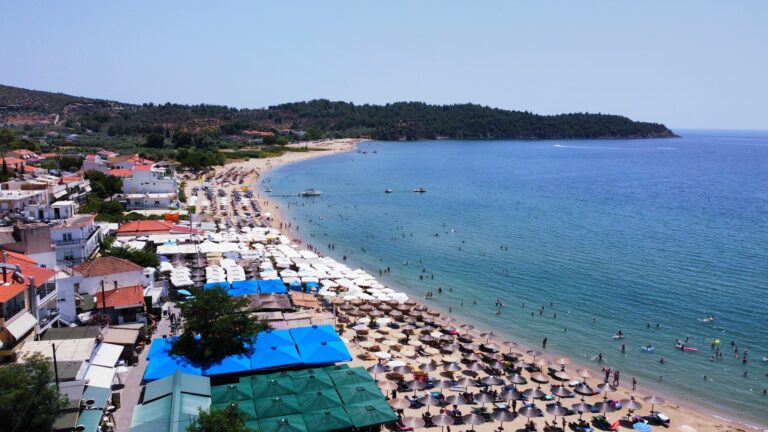
Potos — 5 kilometres from Psili Ammos — is the largest resort on the southern Thassos coast, with a marina, a promenade of restaurants and bars, and the full range of summer resort accommodation. It is the service centre for Psili Ammos visitors who need cash, supplies, or a meal outside the beach bar options. The Potos to Psili Ammos drive is one of the most scenic short coastal drives on the island — the southern coast between the two locations has the mountain backdrop of the Ipsario ridge visible to the north and the open Aegean to the south.
The full southern Thassos coastal circuit — Potos, Psili Ammos, Astris, and continuing east toward Alyki (the ancient marble quarry beach with ruins visible in the sea) — covers the island’s most varied coastal archaeology and the best combination of beach and historical landscape on Thassos.
The Alyki Archaeological Site: Marble Quarry Ruins in the Sea
Alyki Beach, approximately 8 kilometres east of Psili Ammos along the same southern coastal road, is the Thassos beach whose specific quality is the ancient marble quarry ruins visible in the sea — Roman-era blocks and carved stone structures submerged at the waterline, visible while snorkelling. The Early Christian basilica ruins above the beach complete the specific combination of archaeology and beach that the Thassos southern coast provides and that no beach article about the island should omit.
Psili Ammos Beach on Thassos is 250 metres of fine white sand 5 kilometres from Potos — no rocks, shallow entry with sudden deep sections (watch children), volleyball court, Blue Velvet bar in the pine shade on the right, €20–€50 minimum consumption for sunbeds, waves possible on south wind days, olive grove parking above, KTEL bus stop on the road.
Take the ferry from Kavala or Keramoti. Drive south from Limenas.
Check the wind before you go. Arrive before 10:30am for the shade.
Map
Sorry, no records were found. Please adjust your search criteria and try again.
Sorry, unable to load the Maps API.
Near by places: