Karavostasi Beach Bali Crete: The Last Bay at Bali
Profile
Karavostasi Beach, Bali, Crete: The Fourth and Smallest Bay at the End of the Road, Cooled by Psiloritis Springs
Greece | Bali | Rethymno Prefecture, Crete
Bali has four beaches. You reach them in sequence by driving through the village from the main road: Livadi first, then Varkotopos, then Limani, then, at the end of the road where no further driving is possible, Karavostasi. The ordering matters because it explains the character: the end-of-road position means Karavostasi receives only the visitors who specifically came for it. No one passes through on the way to somewhere else.
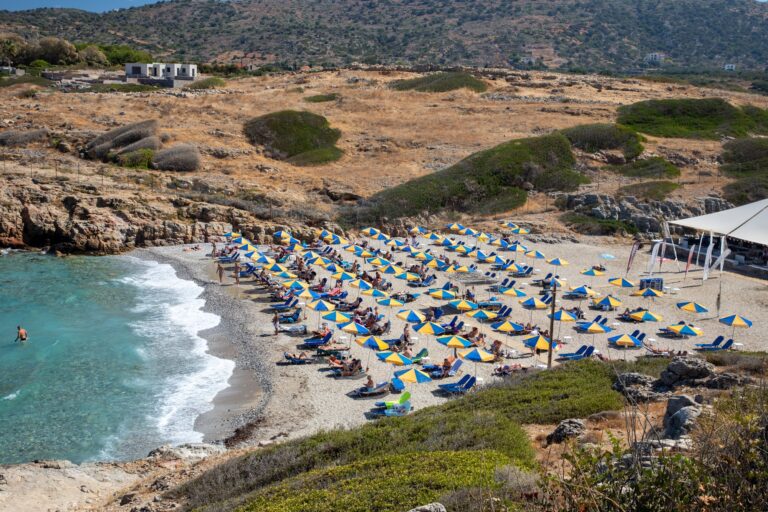
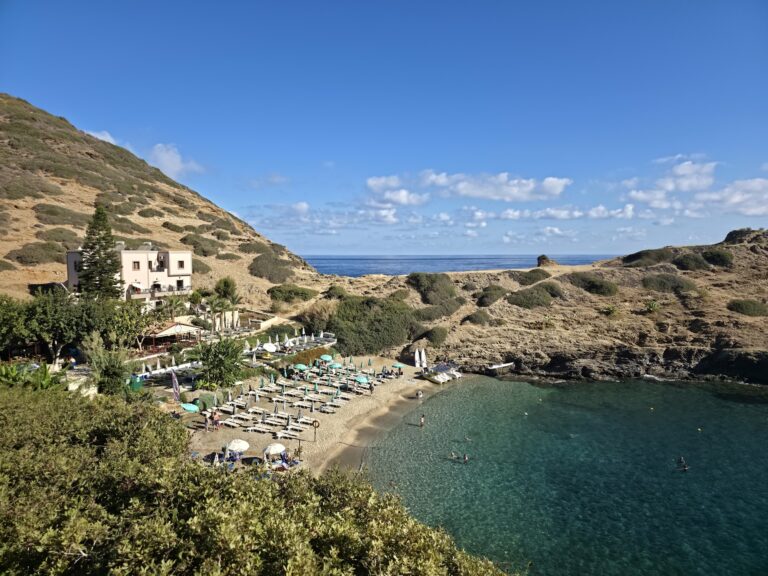
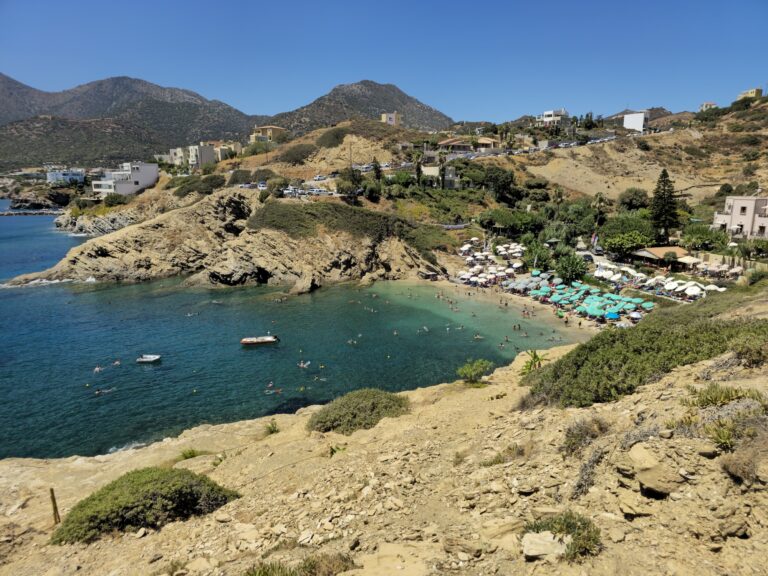
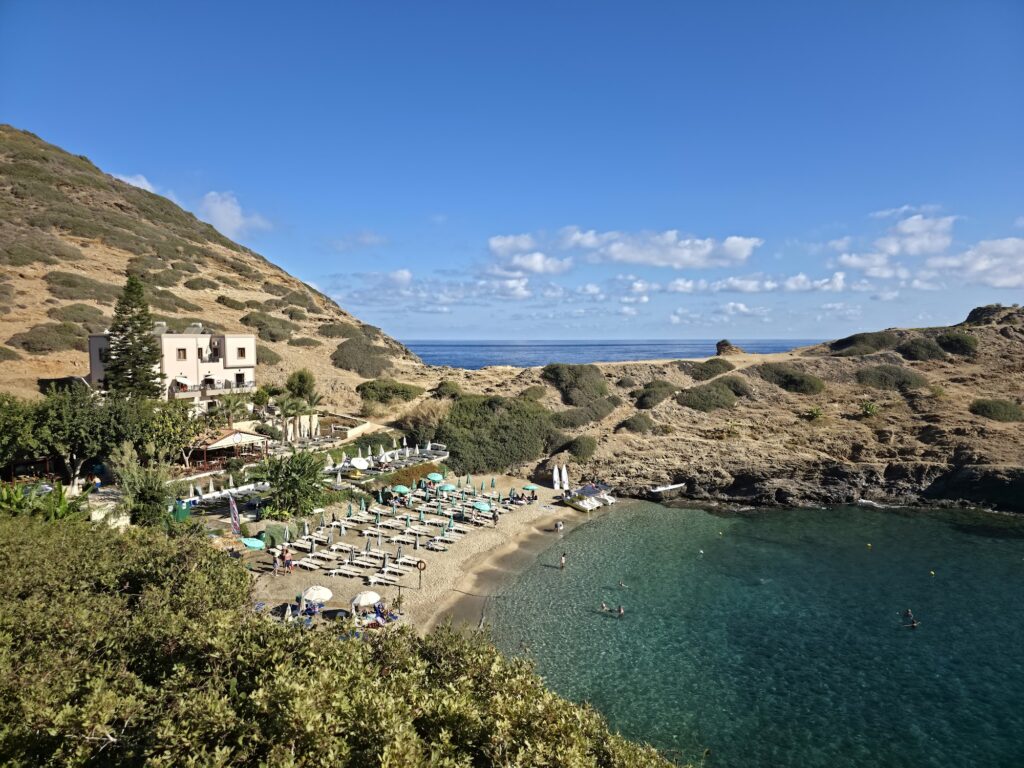
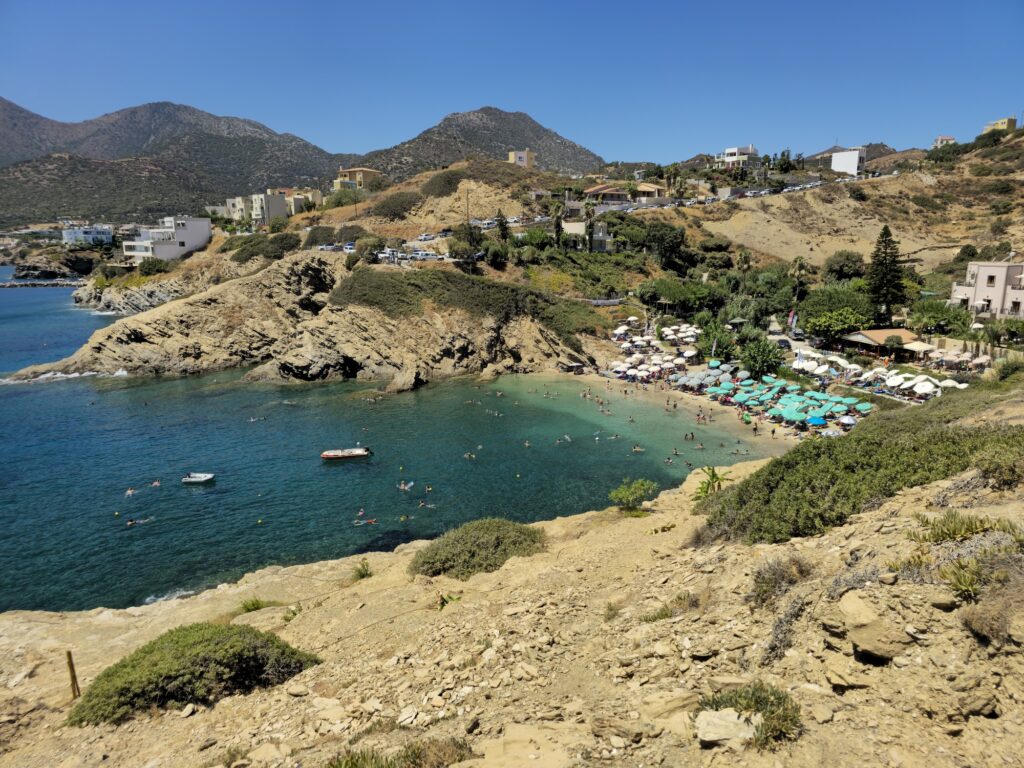
Karavostasi is the last bay that forms at the coastline of Bali, located 33 kilometres east of Rethymno and 54 kilometres west of Heraklion in the Rethymno Prefecture of Crete. It is regarded as the most beautiful beach in the area. It is much smaller than the other bays, which makes it almost always seem crowded. It is well organised but less so than the others. The water is cool because of several springs around the area that carry fresh water into the sea from the Psiloritis Range — the Mount Ida massif that rises to 2,456 metres at the island’s highest point, whose limestone geology channels freshwater springs to the northern coast.
Two things distinguish Karavostasi from the three beaches before it: the small rocky island reachable by swimming from the left side of the beach, with its caves, coves, and abundant marine life; and the freshwater spring cooling that makes the bay noticeably cooler than the open Aegean at the same season.
Getting There: Drive to the End of Bali, Park Above, Walk Down the Steep Steps — Arrive Before 11am
From the E75 National Road between Heraklion and Rethymno, take the Bali exit. Drive through the village following the road that passes the first three beaches. The road ends at a parking area above Karavostasi. Park here and walk down the steep steps to the beach.
The steps are the access reality that every visitor account mentions: steep, not easily navigated with heavy beach equipment, and requiring appropriate footwear. The climb back in the afternoon heat is the part that visitor accounts characterise as more demanding than the descent. The parking itself is limited and fills quickly in peak season — arriving before 10:30am is the consistent advice for both parking and a beach spot.
By KTEL bus from Heraklion or Rethymno (the service runs between the two cities on the northern highway), ask to be dropped at the Bali junction. From the junction, taxis and sometimes a small local shuttle cover the distance to the beaches, with Karavostasi as the final destination.
The beach is not accessible to visitors with mobility limitations. The steep steps and the uneven approach path from the parking area make it impractical for pushchairs or for visitors with walking difficulties.
The Beach: Small Pebble and Sand Mix, Cool Spring Water, Crowded After 11am
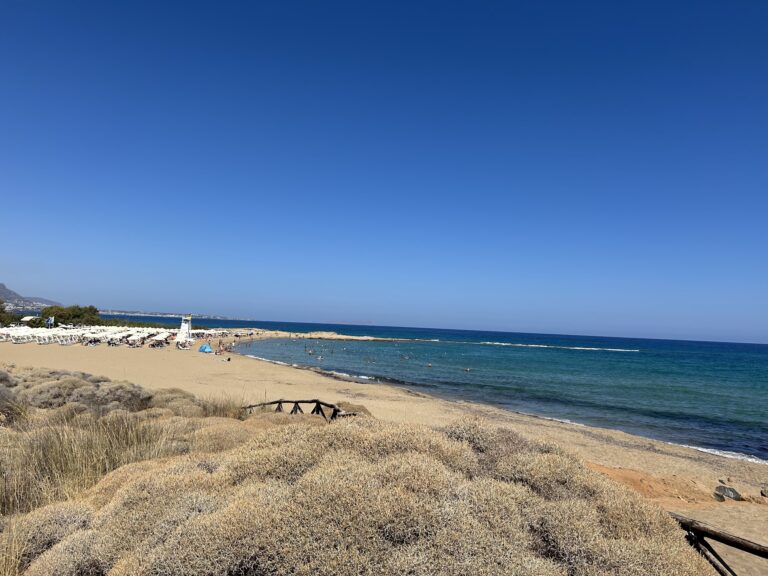
The beach is small — the smallest of Bali’s four — and a mix of pebble and sand. The water entrance is sandy and convenient for children or beginners. Sunbeds and umbrellas cost between €6 and €15 per set depending on position and the operator. The free section — the untaken patches of pebble and sand outside the organised sunbed rows — is limited and disappears by mid-morning in July and August.
The water is noticeably cooler than comparable north Cretan beaches at the same time of year — the freshwater springs from Psiloritis that feed the bay from beneath the limestone substrate produce the temperature differential. For some swimmers this is refreshing; visitor accounts are split between those who specifically appreciate the cool water and those who prefer the warmer open Aegean.
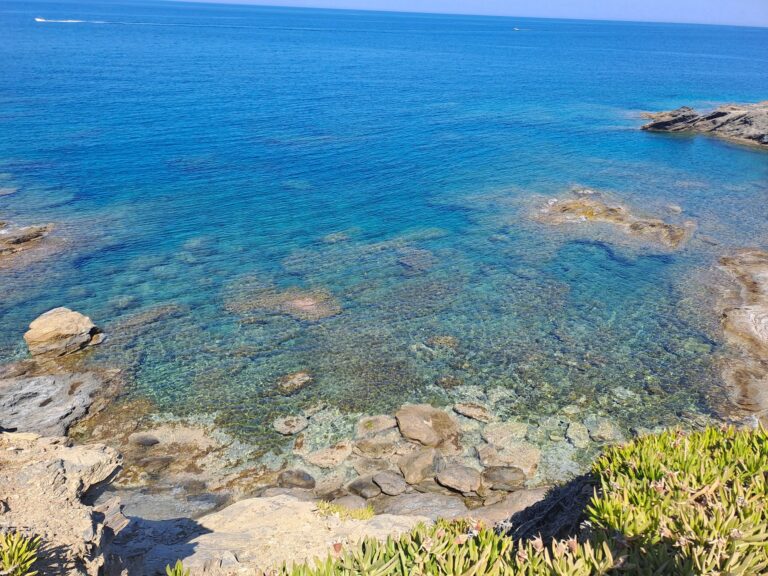
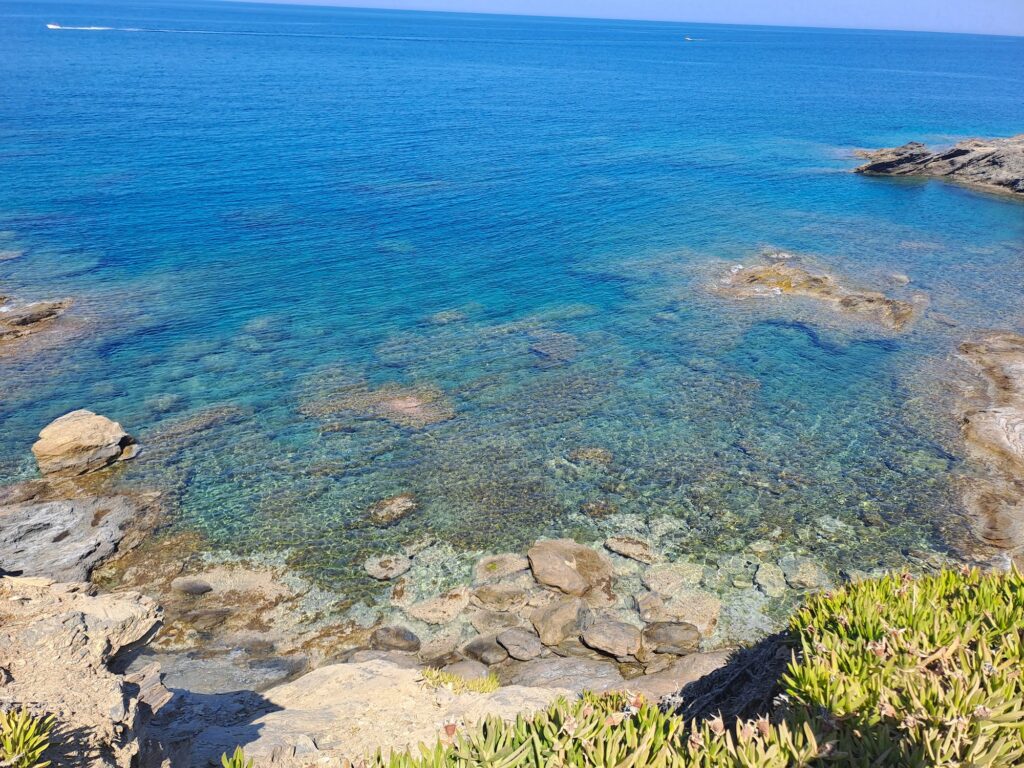
The water at the entry is sandy and relatively gentle, suitable for children who can swim. The pebble sections require water shoes for comfort. The rocks along the bay edges and the island offshore are the snorkelling zones — the varied environment of small creeks, rocky ridges, and shallow pebble areas supports fish species including sargo, schools of mullets, juvenile groupers, and cornetfish.
The Small Island: Swim Left, Find Caves, Fish, and the Colour the Main Beach Cannot Replicate
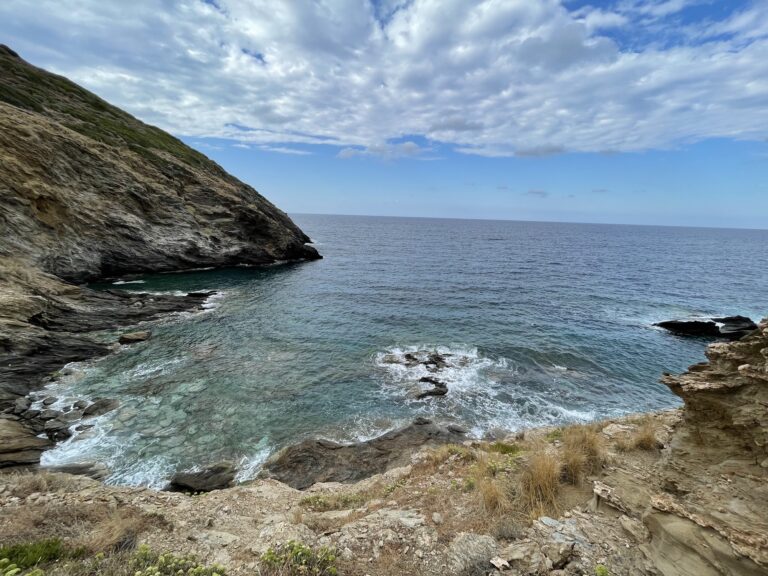
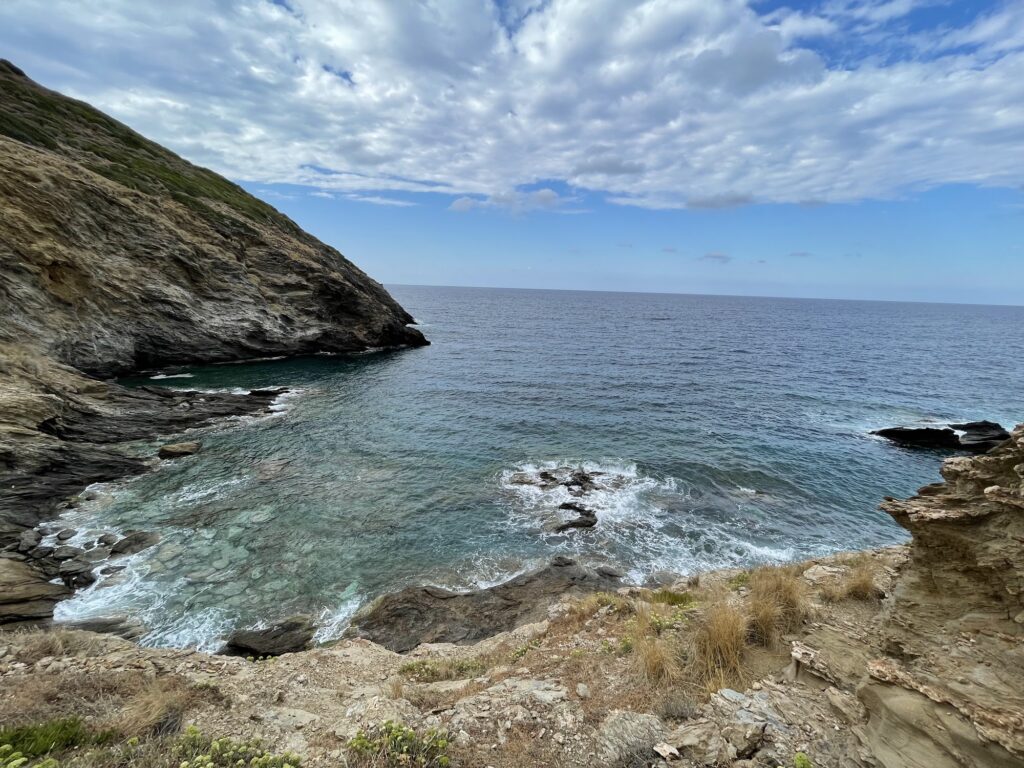
Following the rocks on the left side of the beach, a short swim leads to a small island where the sea is a fairy tale — clear, with lots of fish, coves, and caves. The island is the specific reason that the snorkelling accounts from Karavostasi consistently outrank those from the three other Bali beaches in terms of the underwater experience quality — the island’s rocky habitat, the clarity of the water, and the variety of cave and crevice environments are the combination that the open sandy main beach cannot provide.
The route from the beach to the island requires comfortable swimming ability — it is not a walk, it is a swim. The distance is short but the rocky surface near the island requires entry and exit management with appropriate footwear for the rocky entry sections.
The Two Tavernas: One Named After the Beach, Lunch for Two at €30
There are two tavernas above and behind the beach. The one named after the beach — Karavostasi Taverna — is the one that visitor accounts consistently cite as the recommended choice: lunch for two for just over €30, good fresh fish, Cretan cuisine. The overpriced characterisation in some accounts applies primarily to the second option; the named taverna’s pricing receives generally positive value assessments relative to the quality of food and the setting.
The specific Cretan dishes worth ordering: fresh fish of the day, the local dakos (dried bread topped with tomato, olive oil, and mizithra cheese), and whatever the morning’s catch produced. The view from the taverna terrace over the bay below is the specific visual that the restaurant’s hilltop position above the beach produces — the full bay visible, the island to the left, and the limestone headlands framing the water.
Bali: The Cretan Village with the Indonesian Doppelganger Name
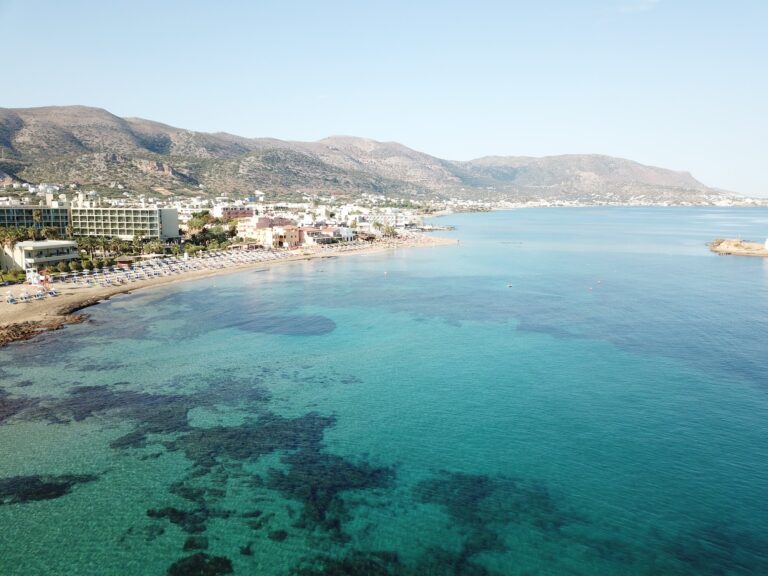
Bali in Crete has no connection to the Indonesian island beyond the shared name — it is a Greek coastal village that pre-dates modern Bali tourism by centuries. The Cretan Bali faces west, meaning its beaches have a western orientation with afternoon sun that the source article’s “Meltemi wind” characterisation makes more accurate: the western orientation provides protection from the summer’s prevailing northwesterly winds, keeping all four beaches in the Bali bay relatively calm throughout the summer season.
The village offers accommodation in Bali village itself, ranging from small studios and apartments to mid-range hotels. The better alternative base for day-tripping to Karavostasi is Rethymno (33 kilometres west) — larger, with the historical Venetian old town, the Fortezza fortress, and the full range of accommodation at every price point.
Psiloritis and the Nearby Day Trips
Mount Psiloritis (Mount Ida) — whose springs cool the Karavostasi water — is the highest mountain in Crete at 2,456 metres. The Ideon Cave on the mountain’s southern slope is the sacred cave where Zeus was raised, the most significant cave sanctuary in the Greek mythological tradition. The Nida Plateau below the summit is accessible by road and provides the specific high-altitude landscape above the island that the northern coast beaches below cannot see.
The Cave of Melidoni (16 kilometres south of Bali) is the Cretan site where 370 villagers were suffocated by Ottoman forces in 1824 when Hussain Bey set fire to the cave entrance to smoke out the sheltering community. The cave is now a memorial and is open for visits.
Karavostasi Beach at Bali in the Rethymno Prefecture of Crete is the fourth and smallest bay at the end of the road — steep steps, cool Psiloritis spring water, small island with caves and fish to the left, two tavernas above (lunch for two at €30), sunbeds €6–€15, crowded after 11am, no access for mobility-limited visitors, 33 kilometres from Rethymno.
Drive through the village past the first three beaches. Park at the end. Walk down.
Go before 11am. Swim left to the island.
Map
Sorry, no records were found. Please adjust your search criteria and try again.
Sorry, unable to load the Maps API.
Near by places: