Xigia Pelagaki Beach Zakynthos: The Sulphur Spa Shore
Profile
Xigia Pelagaki Beach, Zakynthos: The Sulphur and Collagen Springs You Smell Before You See
Greece | Zakynthos | Ionian Islands
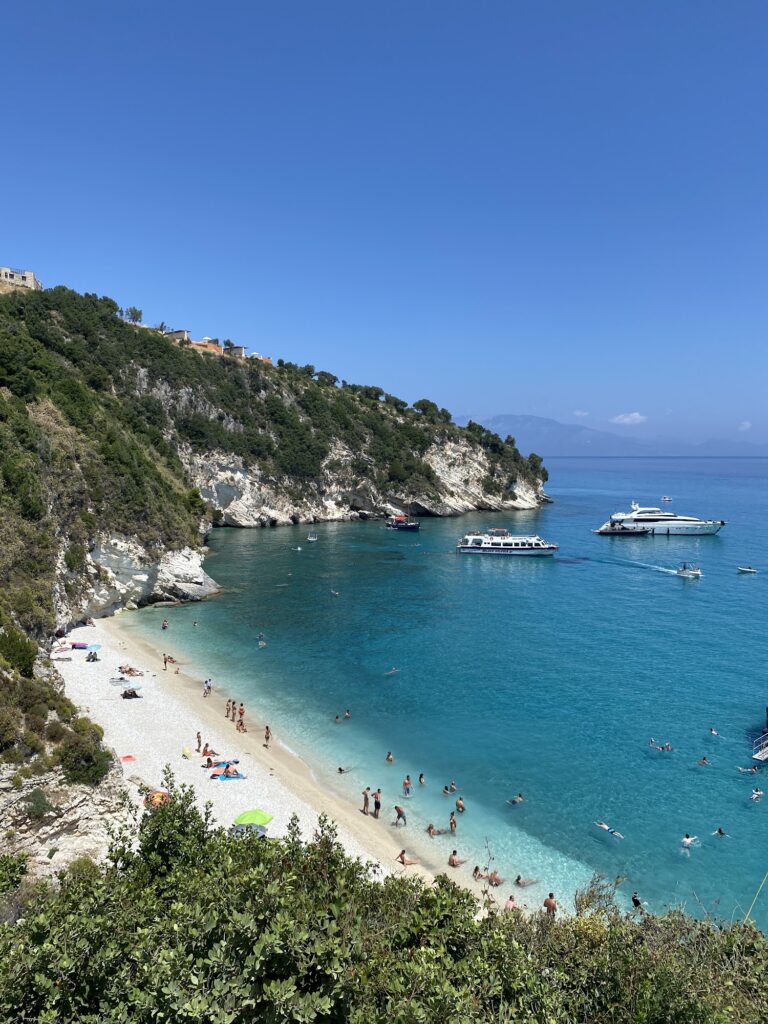
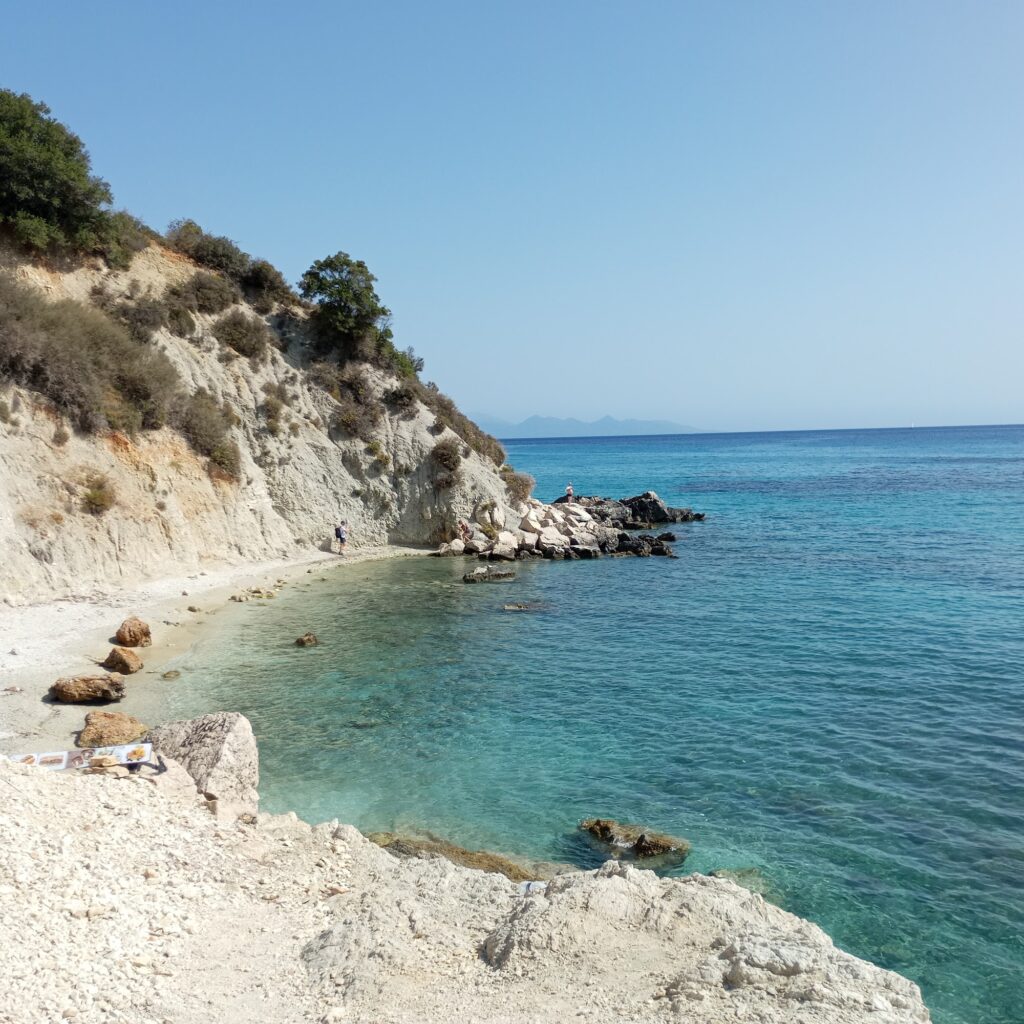
You will smell Xigia Beach before you see it. The characteristic sulphurous egg smell — produced by the natural springs that push through the limestone karst at the base of the northern Zakynthos cliffs and mix with the sea — is the specific sensory introduction that every visitor account of the beach begins with. On calm days the smell is present but mild; on windy days it is strong enough to identify the beach from a considerable distance along the coastal road. The smell is the price of admission to a specific combination that no other Ionian beach offers: naturally occurring sulphur and collagen springs, visible as a milky-white seam where the spring water enters the sea, making the water an almost luminous turquoise near the cliff base and producing a free natural spa effect that has been drawing people to this stretch of the northern coast for decades.
Xigia actually consists of two neighbouring beaches on the northeastern coast of Zakynthos, both known as Xigia. The main attractions are the sulphur’s healing powers and the collagen that oozes constantly from the cliffs into the sea, drawing visitors seeking relief from arthritis, rheumatism, aches, pains, and various skin conditions. The seabed at the main sulphur beach drops abruptly and becomes deep within a few metres from the shore.
The deep water close to shore is the specific practical quality that makes Xigia Beach unsuitable for young children, elderly visitors, and non-confident swimmers. The beach is for confident swimmers. The therapeutic waters, the dramatic cliff setting, and the basket delivery service are the reasons to come; the steep steps, the deep entry, and the sulphur smell are the conditions that make this the wrong choice for families with toddlers.
Getting There: By Car Only — No Public Bus, Parking €5–€7, Steep Steps to the Beach
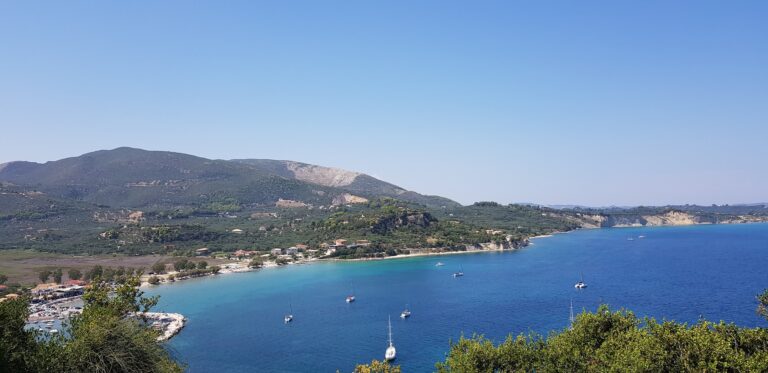
Xigia Beach cannot be reached by public bus. The beach is car or taxi only. From Zakynthos Town, the drive north takes approximately 30 minutes, covering 20 to 23 kilometres toward the northern coast. The road north through Alykes and toward Agios Nikolaos passes both Xigia beach access points.
Parking is available above the beach in the lots belonging to the cliffside tavernas — paid parking at €5 for two hours or €7 for a full day in 2025 season. The lots accommodate 10 to 15 cars at the main beach, which means they fill quickly from mid-morning in peak season. Arriving before 10am is the consistent recommendation for securing parking and experiencing the beach before the crowds arrive.
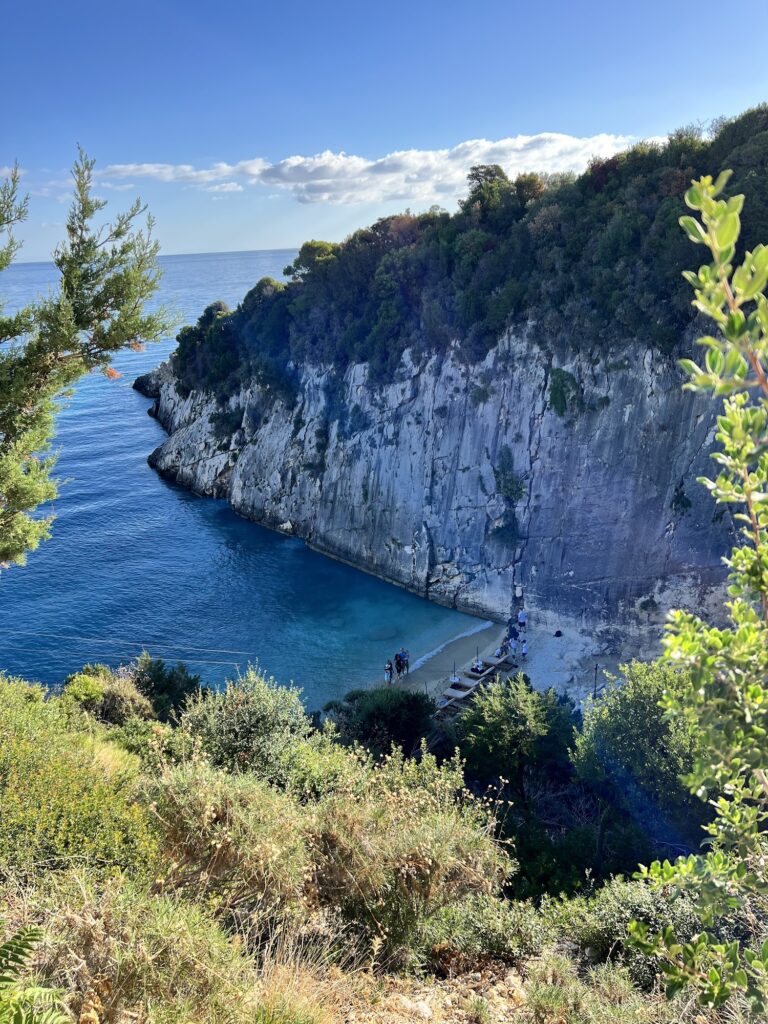
From the parking area, the beach is reached by a long flight of steep steps. The descent takes 1 to 2 minutes but the climb back up in the afternoon heat is the part that visitor accounts mention consistently. One visitor described scrubbing sand all over themselves and swimming in the sulphur and collagen-rich water, adding that “you only age 5 years climbing back up the steep slope to the top of the cliff.”
The beach is not suitable for visitors with mobility limitations. The stairway access is the primary restriction.
The Springs: Two Kinds of Mineral Water, Milky Turquoise Effect, Visible Undissolved Minerals
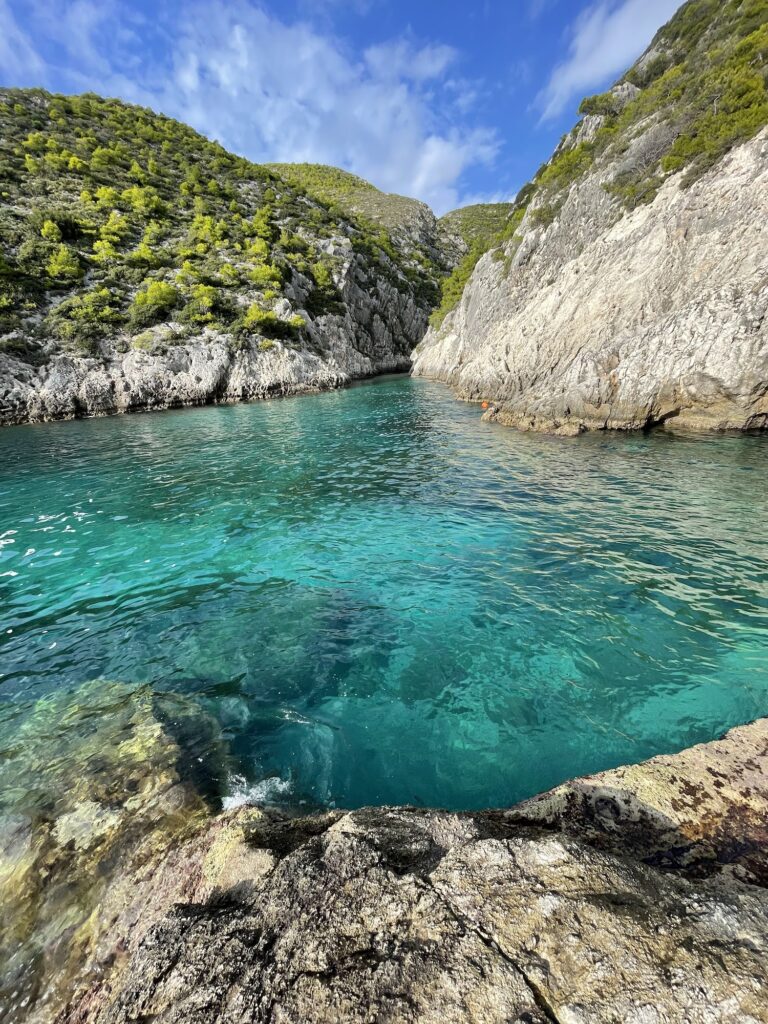
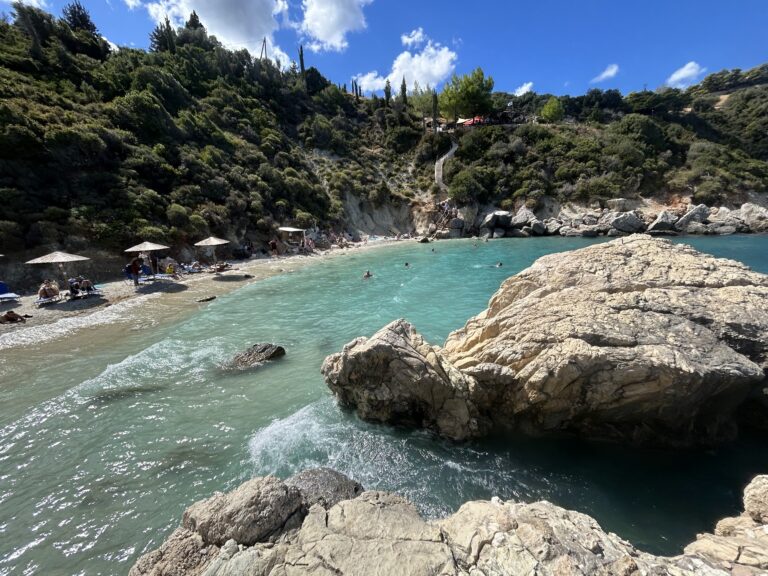
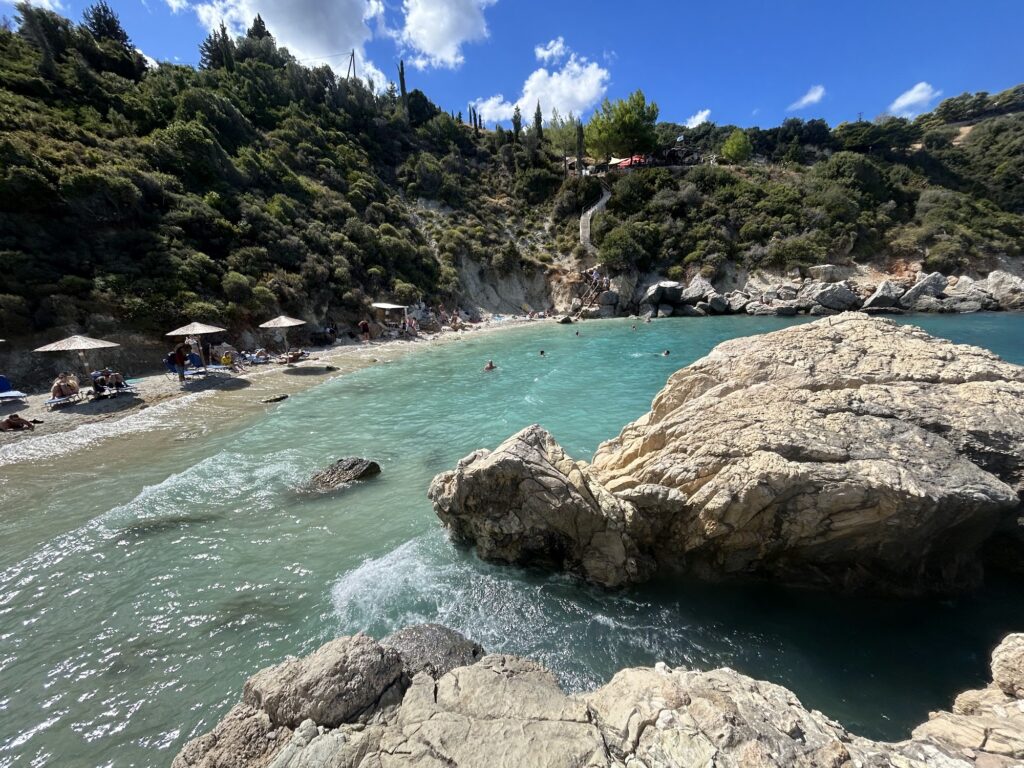
The sea at Xigia is an almost unbelievable light turquoise, due in part to the natural spring water that flows into the sea picking up sulphur deposits through the rocks. The undissolved minerals pouring into the sea are visible in many areas — the flow of sulphur into the sea produces a natural spa which has therapeutic properties.
The spring water contains two distinct mineral components: sulphur (the component responsible for the smell, the milky water effect, and the anti-inflammatory properties) and collagen (the less-discussed component from the marine cave seepage that the marketing accounts emphasise for skin benefits). The combination is what gives the beach its “sulphur and collagen spa” identity.
The spring water is particularly rich in collagen and very good for rheumatism, arthritis, and skin conditions such as psoriasis. These natural spring waters mix with the sea water, making the water highly therapeutic and relaxing.
The cold springs mixing with the warmer Ionian sea water produces the temperature alternations that swimmer accounts describe: pockets of cold water where the springs emerge at the cliff base, alternating with the warmer ambient sea temperature. This temperature variation is the specific swimming quality that makes the experience different from a standard warm shallow beach entry — the water at Xigia is invigorating in the specific sense that the cold spring pockets produce.
The Wicker Basket Pulley Service: Food and Drink Without the Climb
The specific logistical provision that makes Xigia Beach genuinely memorable beyond the sulphur springs is the refreshment delivery system. A small beach bar at the top of the cliffs serves guests via a clever pulley system — serving staff on the beach take orders, then deliver food and drinks via a basket that is pulled up and down the cliff. This means there is no need to walk all the way back up the steep steps to grab an ice cream.
If you reach the beach and forget to order something at the top, you can order from staff on the beach who relay the order to the taverna above by phone, and it arrives in a basket on a rope.
The basket is the specific Xigia detail that every visitor account mentions and photographs — the wicker basket descending the cliff face on a rope, the arrival of drinks and ice cream to the beach below without the climb back up. The taverna that operates the system is family-run and the prices are described as on the expensive side for a small beach canteen — the cliff-top position and the delivery system command a premium. The sulphur warning: the mineral-rich water leaves the skin feeling dry after swimming, making the drink delivery particularly useful.
The Two (or Three) Xigia Beaches
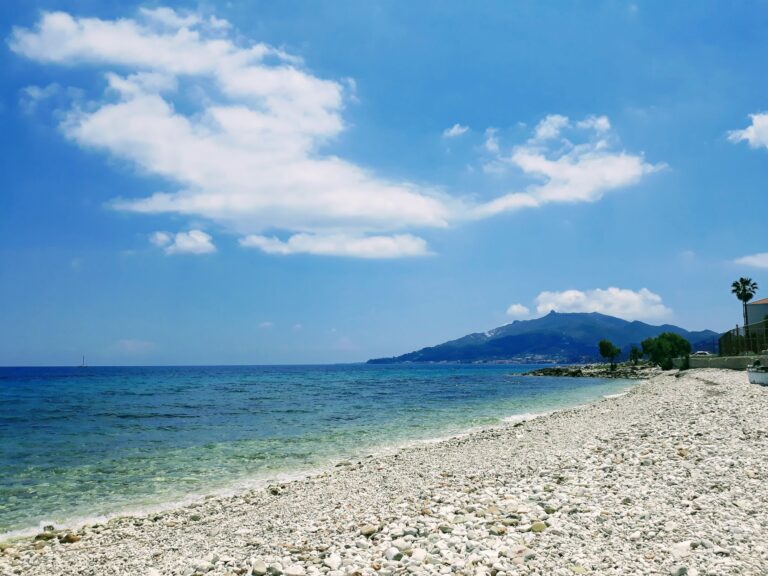
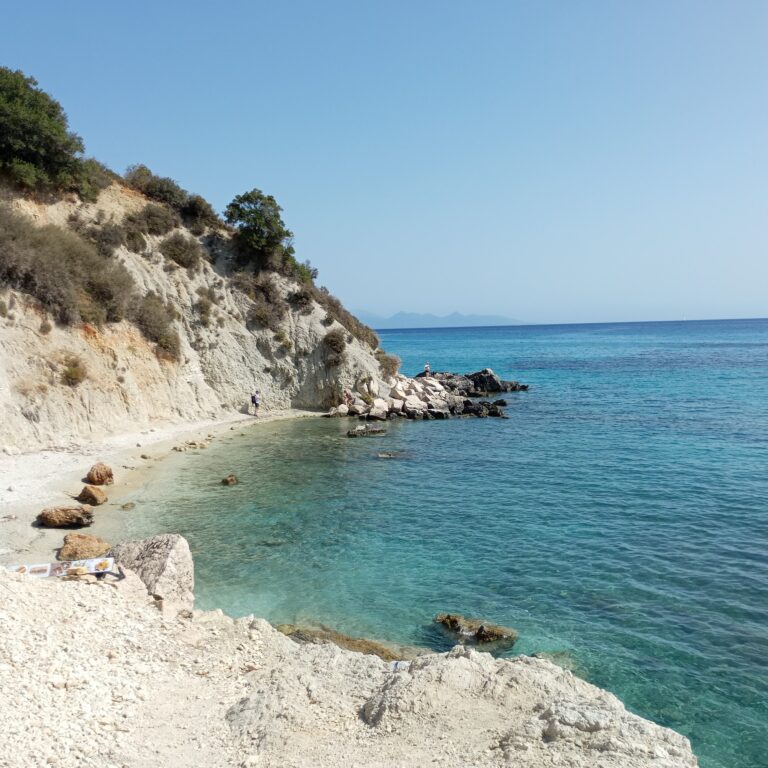
There are two main Xigia beaches on the northern Zakynthos coast, less than one kilometre apart, both known as Xigia. The first, approached from the south along the road north, has a long stairway down to a white pebble beach. The second, a couple of minutes further north, is the main sulphur springs beach — this is the one with the canteen, the basket service, the highest sulphur concentration, and the dramatic cliff enclosure on three sides. Some visitor accounts describe a third smaller beach further along the same coastal section.
The specific Xigia Pelagaki is the second, main sulphur beach — the more enclosed of the two, with the canteen basket service and the higher mineral concentration.
The Smell: Honest Assessment
The sulphur smell is the honest point that no promotional description can avoid. It is described as rotten eggs by most visitor accounts, as “ignorable after a few minutes” by some, and as “hard to tolerate” by others. On windless days at midday the smell is at its most concentrated in the enclosed bay. On breezy mornings the ventilation reduces it. Visitor accounts are consistent that most people adapt to it within 10 to 15 minutes, and that the experience of the water makes the initial olfactory challenge worthwhile.
The specific advice on sunscreen: avoid chemical sunscreens that may disturb the mineral balance of the spring water — reef-safe, mineral-based products are the appropriate choice for this specific environment.
The Northern Zakynthos Context: Navagio Viewpoint, Blue Caves, and Agios Nikolaos Ferry
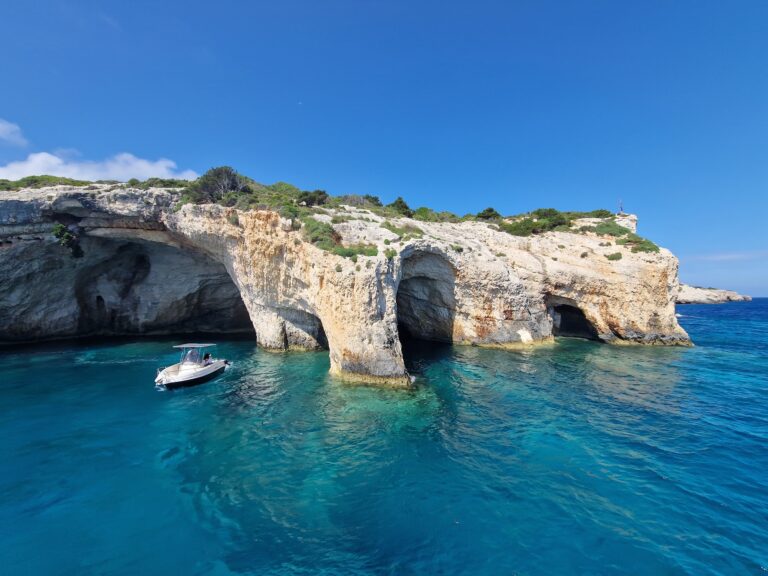
Xigia Beach is in the northern corridor of Zakynthos that also contains the Navagio (Shipwreck) Beach viewpoint on the western cliff — the famous photograph of the rust shipwreck on the white sand beach, accessible only by boat from Agios Nikolaos port, viewed from the cliff edge viewpoint by car. The Blue Caves — the sea caves on the northeastern coast with their characteristic blue-light refraction — are accessible by boat from Agios Nikolaos. Tour operators in Alykes and Zakynthos Town combine all three in day excursions.
Agios Nikolaos ferry port, 8 kilometres north of Xigia, runs the ferry connection to Kefalonia island — the most convenient connection between the two largest Ionian islands.
Xigia Pelagaki Beach on Zakynthos is the white pebble beach at the base of a cliff on the northeastern coast — natural sulphur and collagen springs turning the water luminous turquoise, deep water immediately from shore (not suitable for children, elderly, or non-confident swimmers), the sulphur egg smell that arrives before the beach does, a wicker basket pulley system delivering ice cream and cold drinks from the cliff-top taverna, steep steps up and down, no bus, €5 to €7 parking.
Drive north from Zakynthos Town for 30 minutes. Follow the smell.
Arrive before 10am. Order a drink from the beach staff for basket delivery.
Map
Sorry, no records were found. Please adjust your search criteria and try again.
Sorry, unable to load the Maps API.
Near by places: