Therma Beach Kos: Free Volcanic Hot Spring at the Sea
Profile
Therma Beach (Embros Thermae), Kos: The Free Volcanic Hot Spring That Discovered Itself in 1934
Greece | Kos | Dodecanese
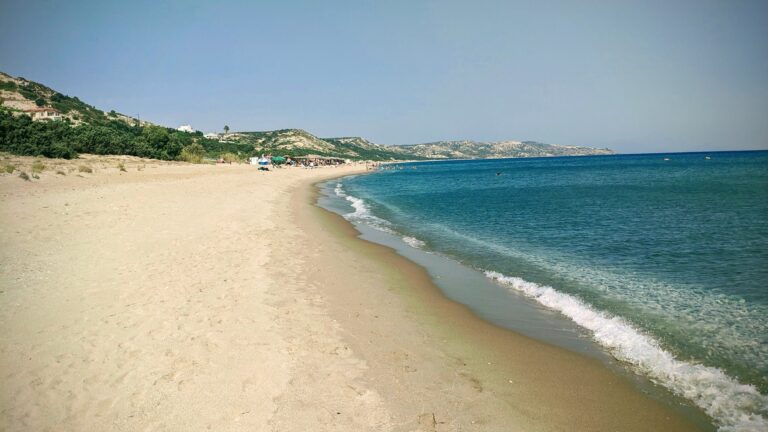
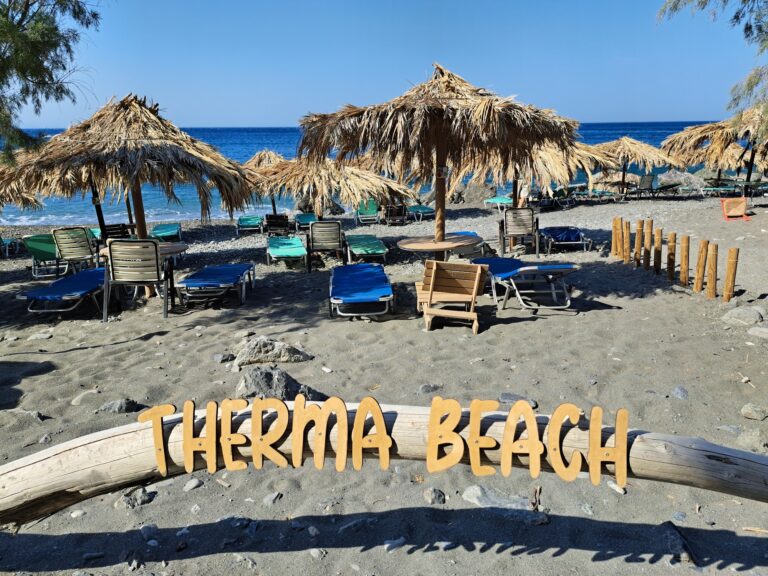
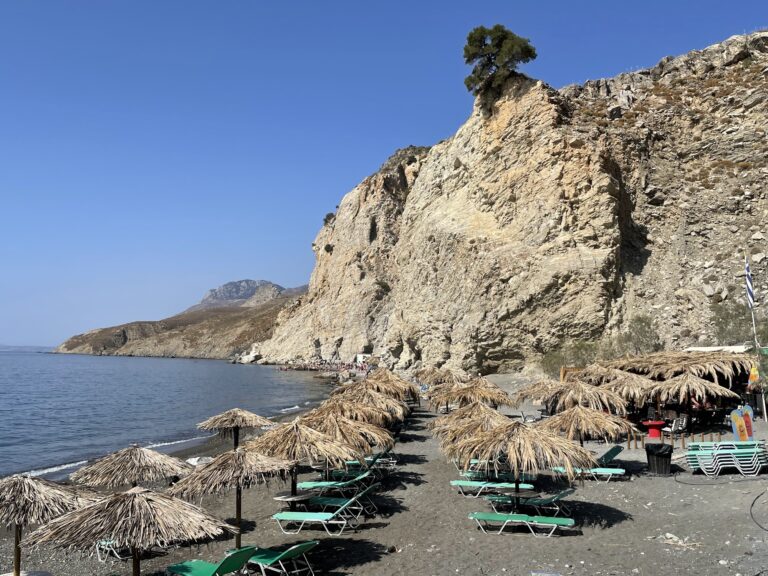
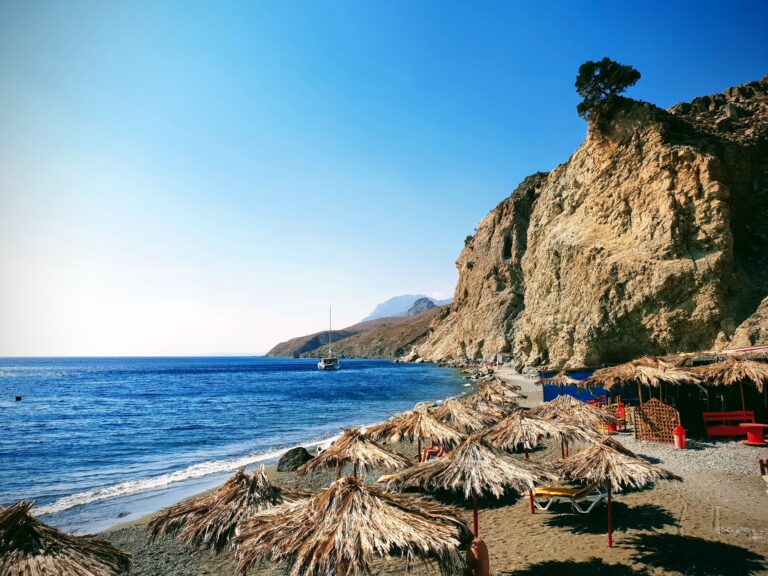
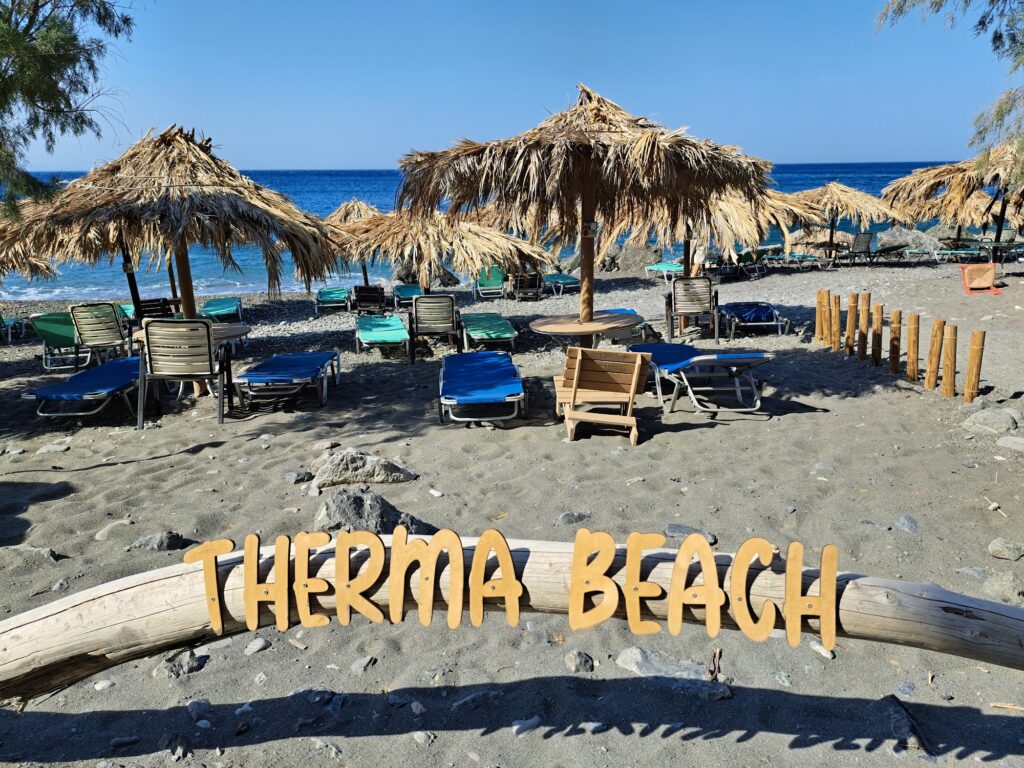
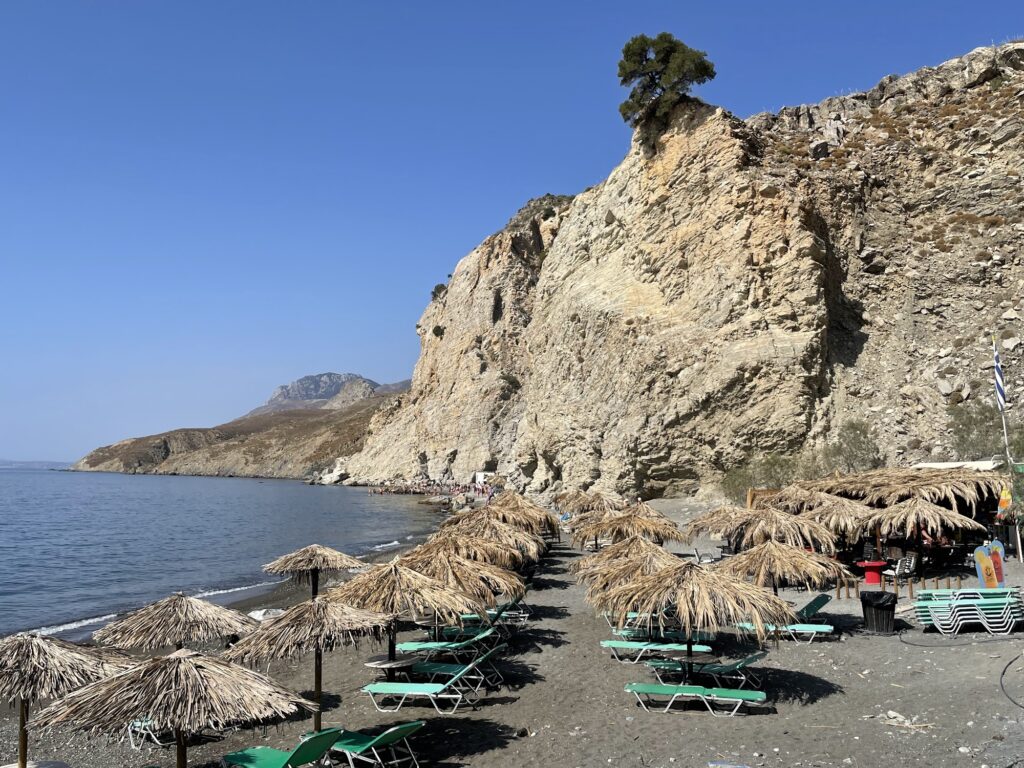
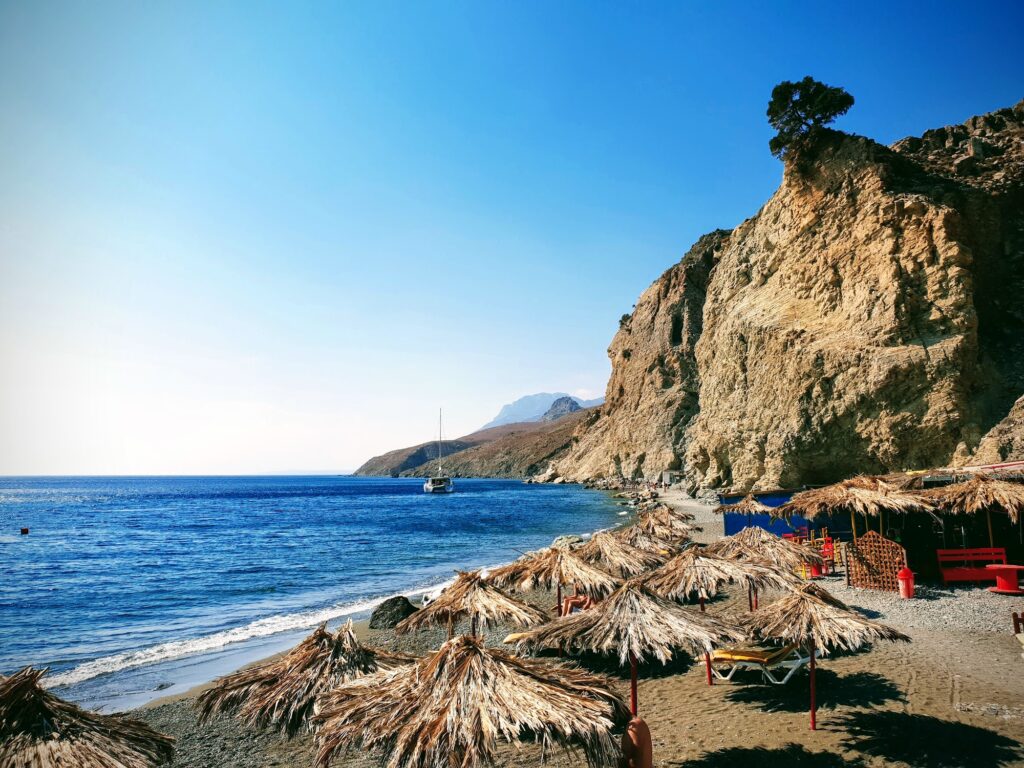
An Italian archaeologist named Laourentsi documented the Therma hot springs in 1934, but the springs themselves had been gushing from the volcanic geology of Kos Island for centuries before anyone wrote them down. The beach was named after the Greek word θερμός — literally meaning hot — due to the hot springs that have been gushing out for centuries, now offering an invaluable outdoor spa experience. The wild and volcanic natural environment offers impressive scenery with large rocks, scattered trees, stony coves, and black pebbles. The beach is covered with dark sand and stones as a result of pre-existing volcanic activity.
The 2017 earthquake that struck the Kos and Bodrum area increased the hot spring flow and consequently raised the pool temperature — a seismic event that improved the attraction rather than damaging it, and that is specific enough to be worth noting for visitors who read accounts from before 2017 and find the temperature descriptions lower than current reality. The thermal pool water temperature ranges between 42 and 50°C — the closer to the source, the hotter. Small gas bubbles rise constantly to the surface, caused by volcanic gases being pushed up from the sea bed. The water is rich in calcium, potassium, sodium, sulphur, and magnesium.
The pool is free. Admission has never been charged. There are no changing rooms and no toilets at the beach itself. The site is not wheelchair accessible. Wear dark swimwear — sulphur stains light-coloured fabric.
Getting There: 13km from Kos Town, Bus Line 5, by Car or Scooter, or by Bicycle
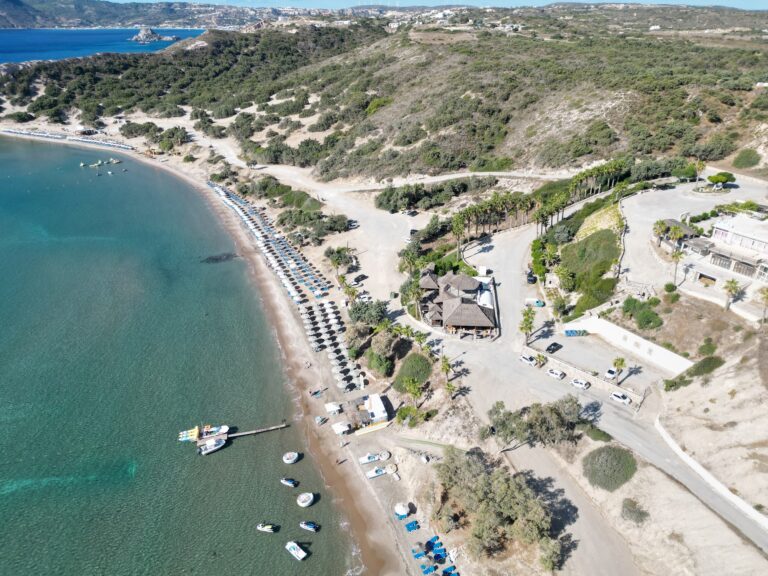
From Kos Town, the drive to Therma Beach follows the coastal road southeast through the Psalidi resort zone and past Agios Fokas, ending at the road terminus where the car park is located. The drive takes 15 to 20 minutes. The road is asphalt throughout and the access is straightforward.
Bus line 5 runs from the city bus stop near the Albergo Gelsomino Hotel in Kos Town to Embros Thermae — the journey takes approximately 20 minutes and the return fare is approximately €4. The bus is the option for visitors without a hired vehicle and the practical choice for those who want to visit in the evening without driving on dark rural roads.
By bicycle, the coastal path from Kos Town extends toward Psalidi but the final section to Therma is on the main road, where the cycling experience is less comfortable. The distance (13km) makes the bicycle approach a moderate commitment but manageable in cooler morning hours.
At the car park, the café/canteen/bar at the top of the descent provides the cold drinks that visitor accounts unanimously recommend for the return climb. The descent to the beach takes approximately 10 minutes on a steep dirt path. It is possible to drive down but the walk is the more practical option for most visitors. The path is not wheelchair accessible.
The Hot Spring Pool: 25m², Variable by Day, Up to 50°C Near the Source
The thermal pool at Therma is a natural formation — large stones arranged around the point where the spring water emerges at the sea’s edge, creating a roughly circular pool of approximately 25 square metres where the hot spring water mixes with the Aegean seawater. The pool is not constant: the pool size changes daily depending on wind and sea conditions. A strong southerly wind drives sand and stones into the pool, silting it over and reducing it to a large warm patch rather than a swimmable pool. After storms, the pool can be almost entirely silted and unusable. Locals dig it out periodically when conditions allow.
The water flows into the pool at 45 to 50°C and mingles with the sea water, creating different levels of heat across the pool area — more bearable beyond the pool where the sea provides cooling. The spring water is rich in sulphur (the distinct smell is clearly identifiable), potassium, calcium, and magnesium, and has therapeutic benefits for the muscular and respiratory system, helping in cases of arthritis, rheumatism, and liver, dermatological, and ophthalmological conditions.
The strongly recommended maximum immersion time is 35 minutes — the sustained heat of 40 to 50°C makes longer sessions physiologically inadvisable regardless of comfort. The practice of alternating between the hot pool and a swim in the cooler sea beside it is both the physically sensible and the most enjoyable approach.
The sulphur smell is present and noticeable — a consistent feature of every visitor account. It is described as “rotten eggs” or “distinct but not unbearable” depending on the reporter and the day’s conditions. It does not represent a water quality problem — it is the natural chemistry of the spring.
The Dark Volcanic Beach and the Nisyros View
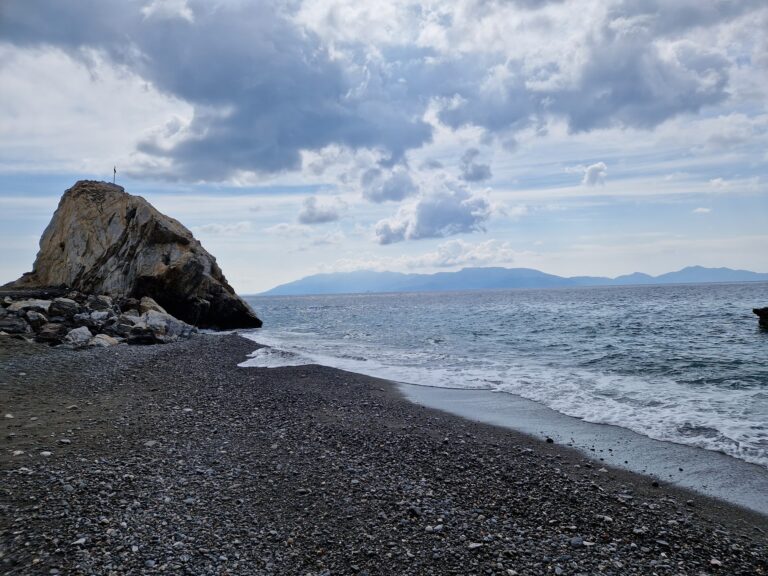
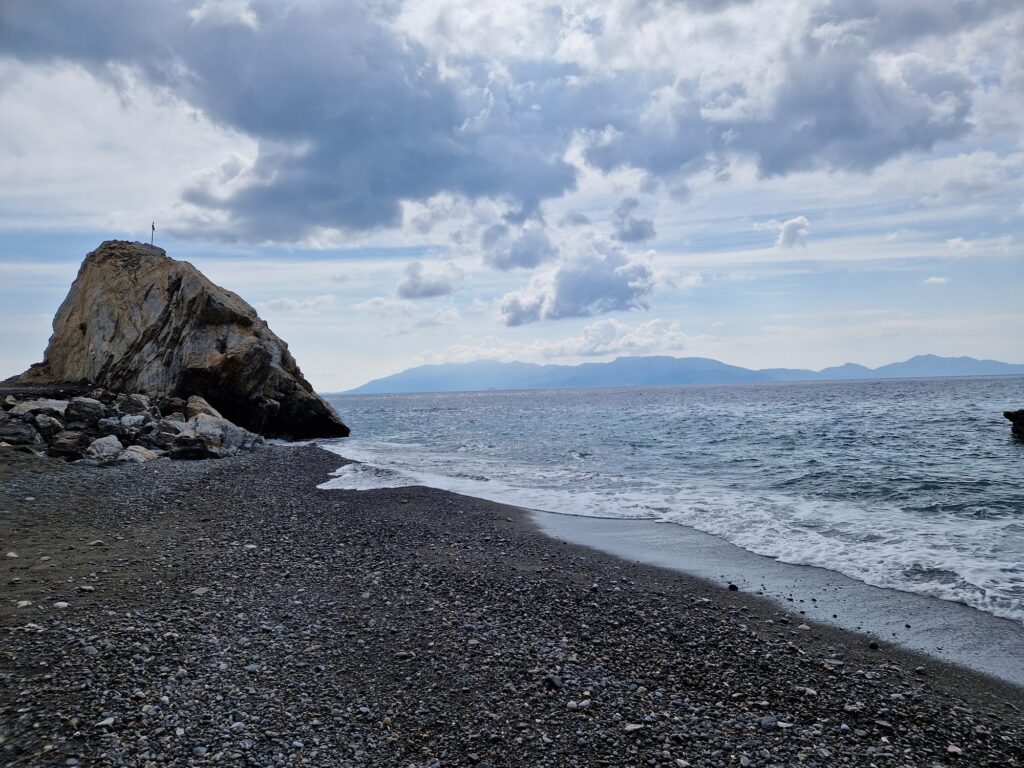
The beach surface at Therma is dark volcanic pebbles — smooth, black, and visually distinctive relative to the pale limestone beaches that characterise most of the Kos coastline. The dark surface absorbs and retains heat more than pale pebble or sand, making it uncomfortable to walk on barefoot in midday sun. Water shoes or flip flops are necessary for the approach to the pool across the pebble surface.
The view from the beach looks southeast toward the volcanic island of Nisyros — the active caldera island that sits 20 kilometres from the Kos coast and whose volcanic profile on the horizon provides the visual confirmation that the geology producing the Therma hot springs is part of the same broader South Aegean Volcanic Arc that also produces Santorini, Milos, and Nisyros itself.
The dramatic cliff and rock landscape above the beach — the source article’s reference to Mt. Dikeos — is the specific backdrop that gives the site its visual power: the steep volcanic geology descending to the dark pebble shore and the hot pool at the waterline.
Practical Warnings: No Facilities, Pool Variability, Sulphur Staining, Children’s Safety
The specific practical information that visitor accounts consistently emphasise, beyond what promotional material tends to mention:
There are no toilets and no changing rooms at the beach. The café at the top of the descent has facilities, but the beach itself does not.
The pool is not guaranteed to be present in swimmable form on any given day — storms, wind direction, and sea conditions can reduce or eliminate it. Visitor accounts include disappointed reports from those who made the descent to find no pool.
Sulphur stains light fabric permanently. Wear dark swimwear.
Children should be supervised at the pool exit point where the spring water emerges — the temperatures at the source outlet can scald. The general pool is hot but tolerable; the source outlet is scalding.
The goats wandering on the cliff path and around the beach are a feature of the setting, not a hazard.
The Evening Visit: Sulphur Under Moonlight
Visit the hot springs in the evening to indulge in the experience under the starry sky. On a moon night, the sulphur radiates under the black sea, resembling underwater fireflies. The evening visit is the specific programme that the Therma official tourism site recommends as the optimal experience, and visitor accounts consistently confirm: the hot pool lit from below by the sulphur bioluminescence-like glow, the dark sea beside it, the cliff above in darkness, and the Nisyros profile on the horizon in moonlight. The bus runs late enough to make an evening visit without a car practical.
Therma Beach on Kos is the free volcanic hot spring 13 kilometres southeast of Kos Town — 42 to 50°C water in a naturally formed pool where the spring meets the sea, dark volcanic pebbles, no facilities at the beach, pool size variable by day, sulphur stains light swimwear, the Nisyros caldera on the horizon, and the best version of the visit is under the moon on a clear night.
Take bus line 5 from Kos Town. Walk down the path. Have a cold beer at the café on the way back up.
The pool will be whatever size the sea has decided today.
Map
Sorry, no records were found. Please adjust your search criteria and try again.
Sorry, unable to load the Maps API.
Near by places: